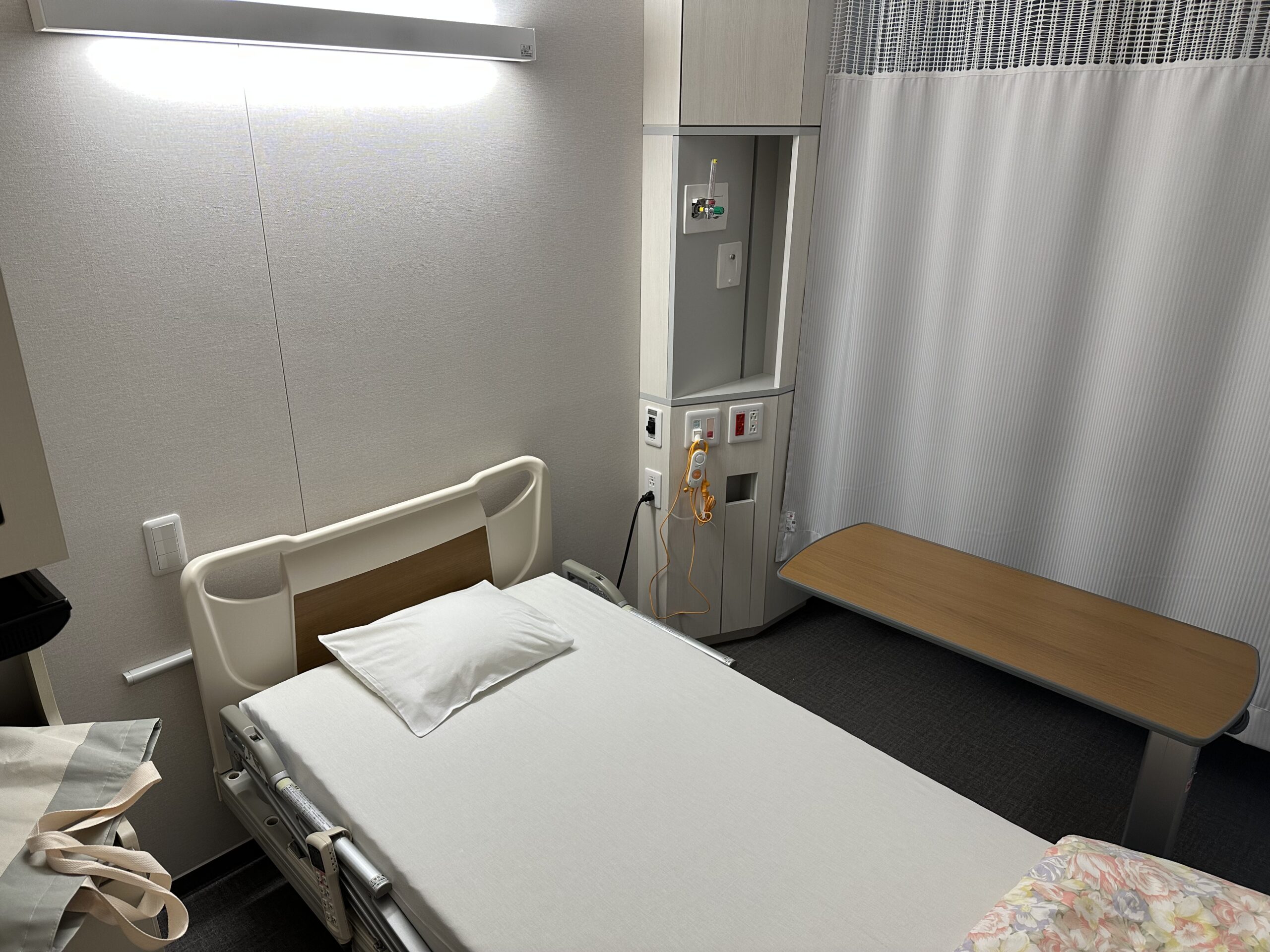
Giving birth in Japan can be very different from giving birth in the United States or Europe—especially when it comes to epidural births.
In many Western countries, epidurals are extremely common. In Japan, however, epidural birth rates are still relatively low, and many hospitals either don’t offer them at all or only offer them during limited hours.
Because of that, choosing the right hospital became one of the most important decisions during my pregnancy.
This is the story of my 81-hour labor and epidural birth in Japan, including a three-day induction and what it was like giving birth at St. Marianna University School of Medicine Hospital in Kawasaki.
Why I Chose St. Marianna University Hospital
I live in Kawasaki City, and after researching hospitals in my area, I decided to give birth at St. Marianna University School of Medicine Hospital (聖マリアンナ医科大学病院).
One big reason was that the hospital is a large regional hub hospital with a huge medical campus and many specialized departments.
Most importantly for me, the hospital has a full anesthesiology department available 24 hours a day.
That matters a lot in Japan.
Because epidural birth is still less common here than in the US or Europe, some hospitals that advertise “painless birth” actually have obstetricians performing the epidural instead of anesthesiologists.
While obstetricians may have training in epidural techniques, anesthesiologists perform epidurals far more frequently as part of their daily practice. Personally, I felt much safer knowing a specialist anesthesiologist would handle the procedure.
Another bonus was the facility itself. The hospital had recently undergone major renovations, and the outpatient building was newly updated in 2025, so everything felt extremely clean, modern, and comfortable.
Switching Hospitals at 20 Weeks
At the beginning of my pregnancy, I was seeing a local obstetrics clinic near my home.
Later I discovered they did not offer epidural births.
By the time I realized this, I was already about 20 weeks pregnant, which is relatively late to switch hospitals. However, because I specifically wanted an epidural birth, St. Marianna agreed to accept me as a patient.
From that point on, I did all my monthly prenatal checkups there.
About two months before my due date, the hospital also required epidural patients to attend a special information session.
During the session, doctors explained:
- how epidurals work
- possible complications
- rare life-threatening risks
I also had to sign several consent forms and medical disclaimers.
The process was very thorough, but it made me feel confident that the hospital was serious about safety.
My Due Date Passed… With No Signs of Labor
My due date was June 29.
But as the days passed, nothing happened.
No contractions. No signs of labor.
Finally, on July 3 (40 weeks + 3 days), I had a scheduled hospital appointment.
Just in case, I brought my hospital bag and admission kit with me.
When I arrived, I joked to the staff:
“I brought my admission set with me just in case.”
As it turned out, the hospital happened to have an available bed, so they admitted me that same day.
That was the start of my induction.
Day 1 of Induction (July 4)
Early the next morning, the induction process began.
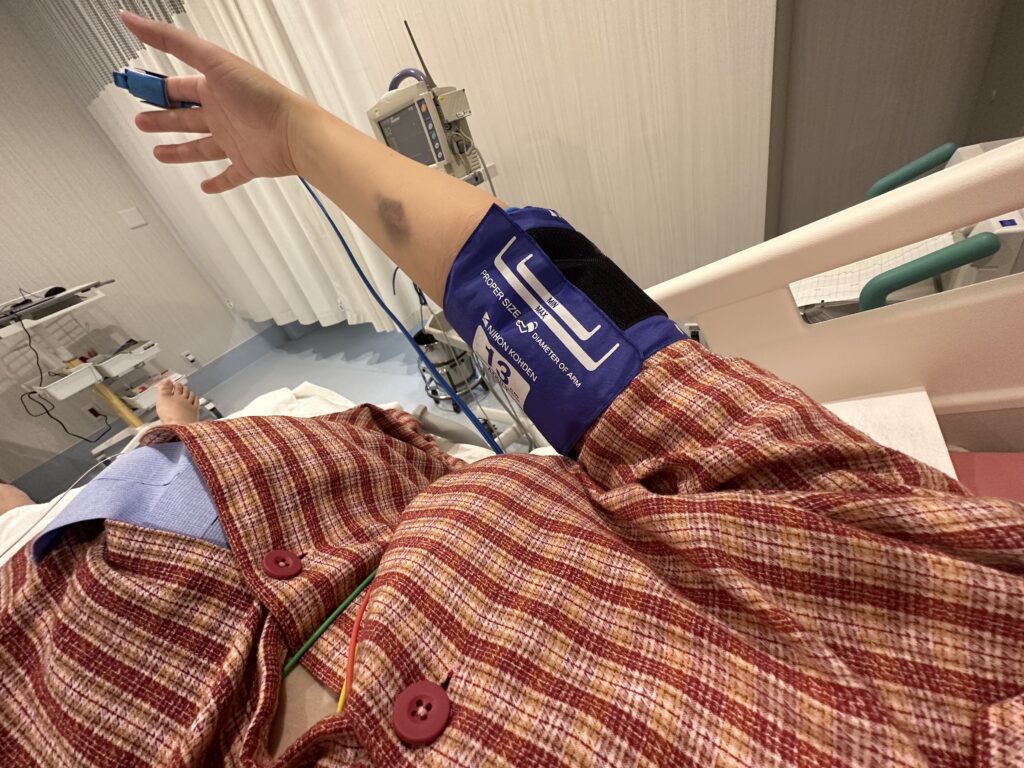
At 6:20 AM, I was moved from my hospital room to the delivery room and connected to an NST monitor to track contractions and the baby’s heartbeat.
Around 8:10 AM, the doctor removed the laminaria used to help soften my cervix and inserted a cervical ripening medication. My cervix was about 2–3 cm dilated, and the procedure was surprisingly painful.
By 11:00 AM, I had reached 4 cm dilation.
Soon after, contractions started coming every two minutes, so I skipped lunch.
Getting the Epidural
At 1:20 PM, the anesthesiologist arrived to place the epidural.
The procedure was surprisingly quick.
The doctor:
- checked my spine
- disinfected the area
- gave a small local anesthetic injection
- inserted the epidural needle
The whole process took less than 10 minutes.
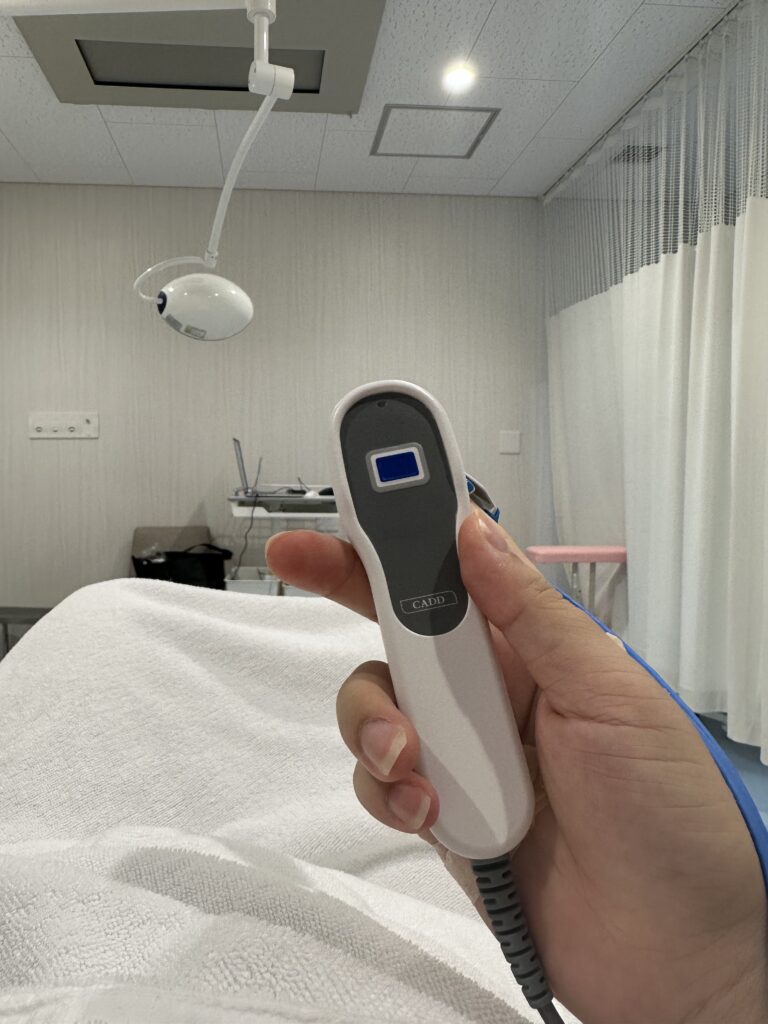
The epidural worked extremely well. I didn’t even need to press the patient-controlled dose button for several hours.
The sensation was actually very pleasant.
The best way I could describe it was:
like sliding freshly shaved legs into clean silk sheets after a hot bath.
Epidural Side Effects
One side effect I noticed was itching.
Around mid-afternoon, my body started feeling mildly itchy all over. Apparently, this is a common side effect of epidurals.
It wasn’t unbearable, but it was definitely noticeable.
Labor Stalled
By 6 PM, my cervix could be stretched to about 5 cm, but labor had not progressed enough.
Doctors decided to stop the induction medication for the day and continue the next morning.
I returned to my hospital room and finally got some sleep.
Day 2 – Induction Problems
The next morning, induction resumed.
Doctors started prostaglandin medication to stimulate contractions.
However, something unexpected happened.
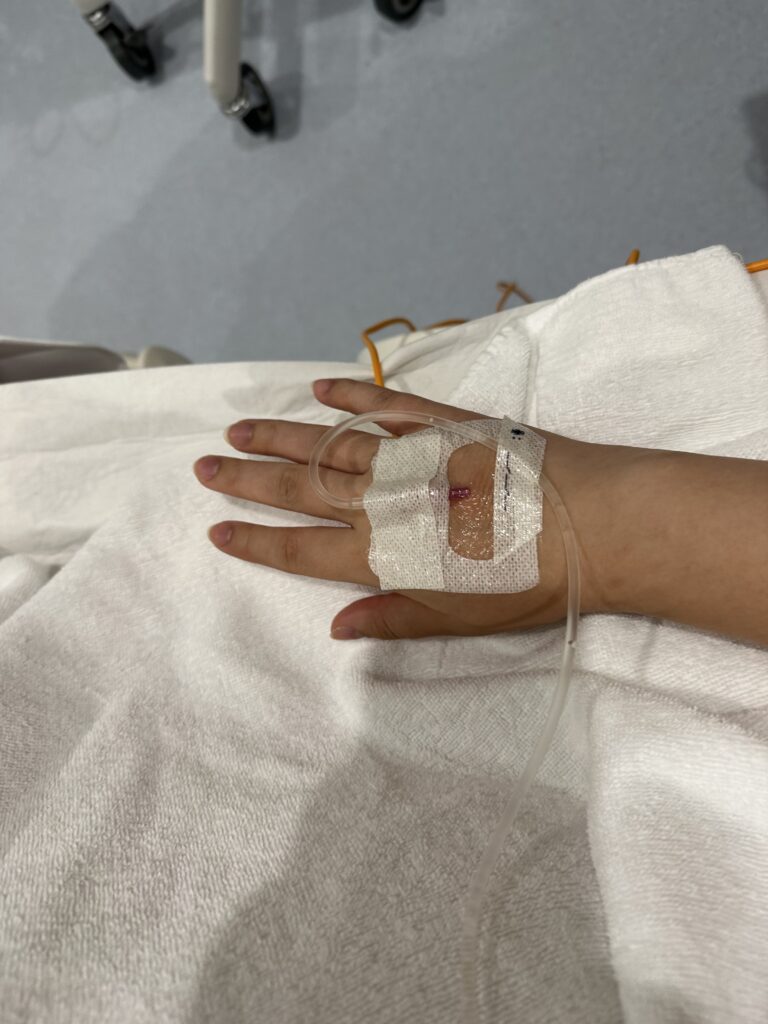
By early afternoon, the nurses discovered that the IV line in my arm had leaked, meaning much of the medication hadn’t actually entered my bloodstream.
In other words, most of the morning had been a wasted attempt at induction.
They placed a new IV line and restarted the medication.
The Long Labor
Over the next two days, labor progressed slowly.
My cervix gradually moved from:
- 6 cm
- to 7 cm
- to 8 cm
At one point, the doctor told me they could feel the baby’s hair, meaning the baby was very close to being born.
Later, the doctor artificially broke my water, and the contractions suddenly became the most intense pain I had ever felt.
Even with an epidural, the pressure was overwhelming.
The Final Stage
By the afternoon of July 7, the doctors finally told me it was time to push.
I was moved fully onto the delivery table.
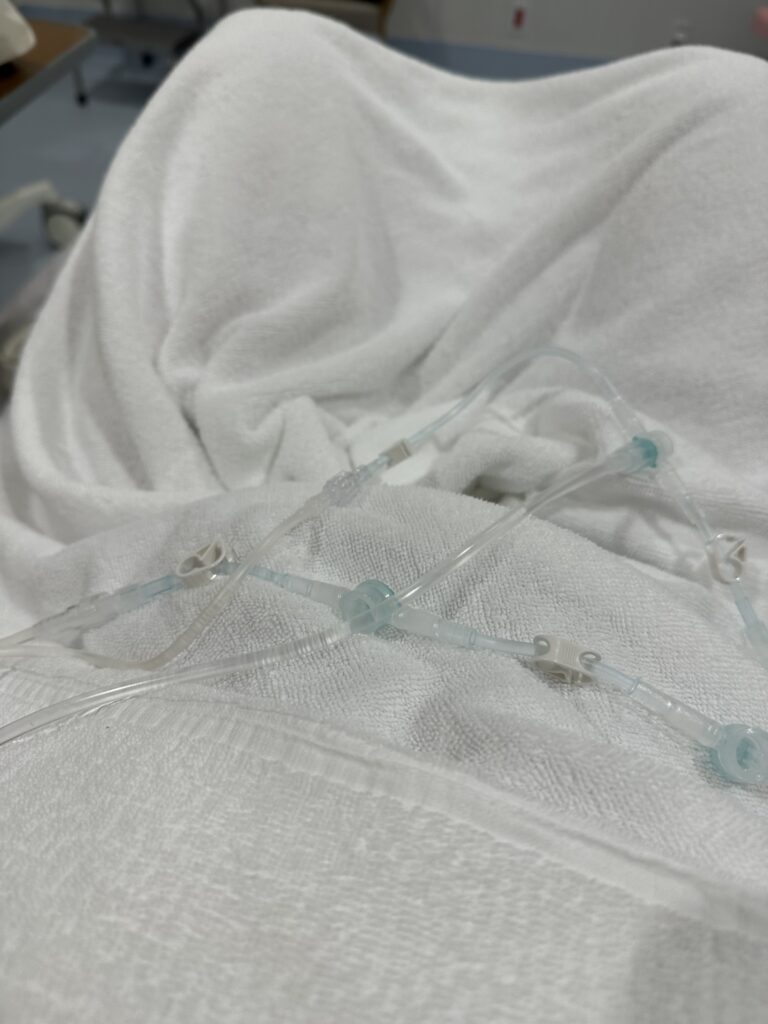
Because the epidural was still working, I could actually send messages on my phone between contractions.
Something I never imagined doing during labor.
Birth
At 3:37 PM on July 7, after about 81 hours of labor, my baby was finally born.
Hearing that first cry was unforgettable.
After three days of induction, exhaustion, and pain, everything suddenly felt worth it.
Advice for Epidural Birth in Japan
If you’re considering an epidural birth in Japan, my biggest advice is:
Research hospitals carefully.
Make sure the hospital has:
- experienced anesthesiologists
- 24-hour epidural availability
- proper emergency support
Large hospitals like St. Marianna University Hospital can provide that level of support.
And while my labor was long and difficult, the epidural made the experience far more manageable.
FAQ – Epidural Birth in Japan
Is epidural birth common in Japan?
No. Epidural rates are much lower than in the US or Europe.
Do all Japanese hospitals offer epidurals?
No. Many hospitals either do not offer epidurals or only provide them during certain hours.
Is an anesthesiologist always involved?
Not always. In some hospitals, obstetricians place epidurals themselves.

コメント